Insights
Best AI Legal Translation Tools in India (2026) for Scanned and Handwritten Documents
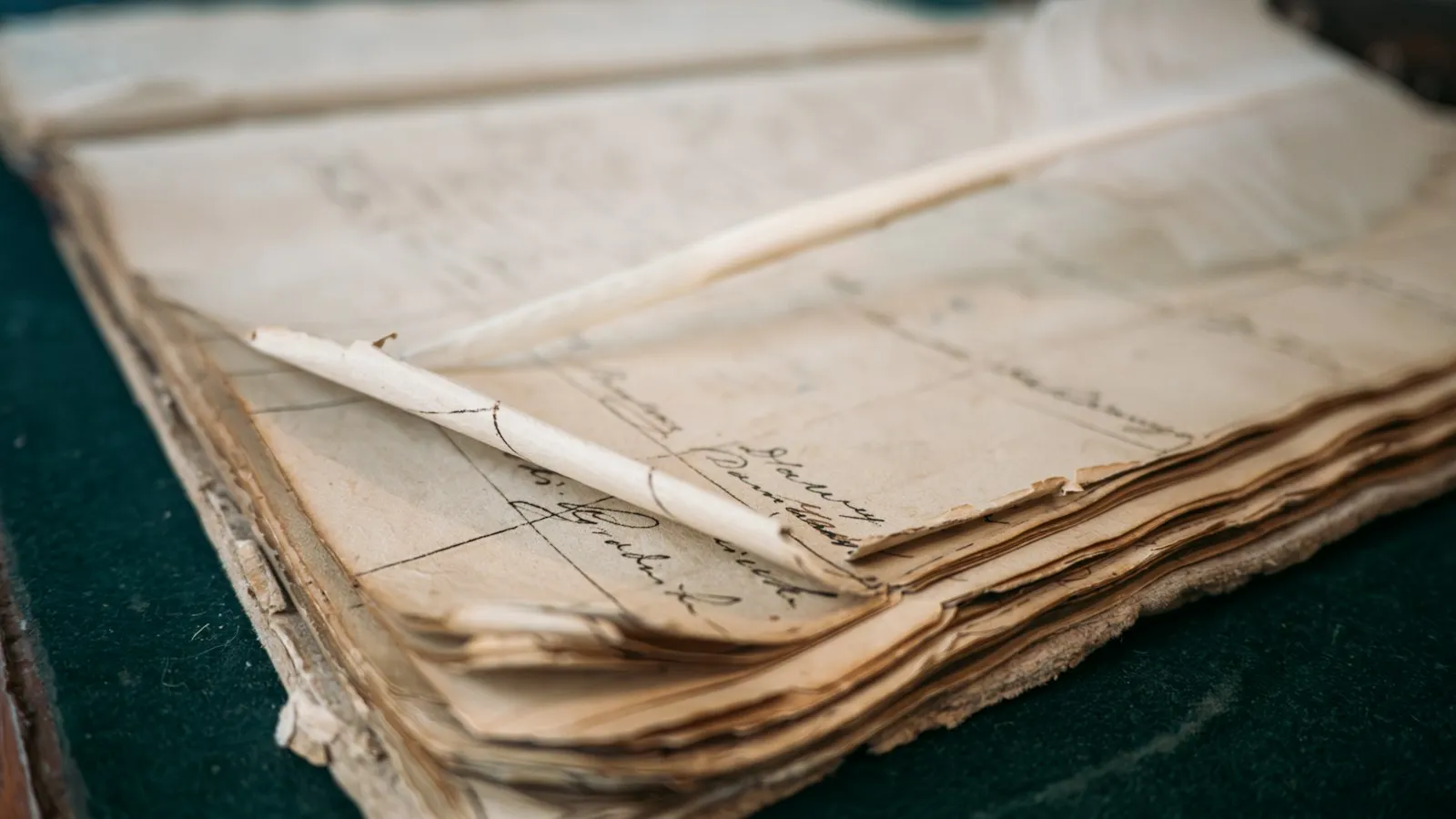
The 7/12 extract came from a village in Raigad district. Everything after the typed header is handwritten: three mutation entries in three hands, and the talathi’s round seal pressed across the area column, so the hectare-are figure has to be read through purple ink. The buyer’s lawyer in Mumbai needs it in English for tomorrow’s filing. The one translator she trusts with land records is in Pune until Friday.
That page sorts the best AI legal translation tools in India from the rest. The typed court order was never the hard case. We explained why this page breaks most software in an earlier post; this one is about which tools survive it.
The first question buyers ask is the right one: can an AI translation be filed in an Indian court? Not on its own, and the rules are set out below. But a translator’s bottleneck was never the translating. It was retyping a faded, stamped, handwritten page, and that is exactly what a machine does well.
We scored nine options, eight of them software, against the same three documents, using what each vendor publishes. Below: the ranking, what each tool reads language by language, what the courts require before filing, and which tool fits which use case.
TL;DR
- For handwritten and regional-language records, Jurisphere is our pick: handwriting read in Hindi, Marathi, Kannada and English, 22 Indian languages, and the English opened beside the source page for review.
- For one document at a time, Jurisphere Translate takes a contract, judgment or agreement, scanned or handwritten, into any of 21 languages with clause numbering intact, from Rs 25 a page plus GST.
- Anuvad.AI handles typed Hindi and Marathi by the page, with legacy-font conversion and a legal glossary, though it publishes no ISO 27001 or SOC 2 certification.
- NyayAssist’s NyayTranslate, launched on 19 October 2026, accepts handwritten pages in nine languages, with its security audits still under way.
- General engines such as DeepL, Google Translate and Bhashini handle typed text, but none of their published pages claims to read handwriting from a scanned form, and none ships a legal glossary of its own.
- Whichever tool drafts the English, filing needs a human step: the court rules want a translation certified by the advocate, agreed by the parties, or made by a court-approved translator.
Why trust this list
We wrote this from the regional-language records Indian legal teams bring to us, and from each vendor’s own published pages.
Jurisphere makes one of the tools on this list, and we have ranked it where we believe it belongs.
SUVAS is not public, so its card draws on a parliamentary answer, court announcements and the engine builder’s own case study. Where a vendor publishes a figure, it is the vendor’s own and labelled as such. For the wider picture, start with our guide to legal AI tools or the shortlist by use case.
How we chose and assessed these tools
Three documents, each picked to break a different kind of tool:
- A handwritten Marathi 7/12 extract with a seal across the figures. It tests handwriting, numerals, and whether columns come back as columns.
- A scanned Hindi FIR, photocopied twice, with the station stamp over the complainant’s name. It tests OCR on a poor scan, names and BNS section numbers.
- A typed Hindi court order set in a legacy font. It tests encoding and legal terminology.
Each tool was judged on what its vendor publishes about OCR, handwriting, numerals and names, legal terminology, formatting, confidentiality (certifications, training policy, retention) and price. No tool was tested hands-on for this article; every description, ours included, comes from the vendor’s own published pages. No vendor has yet published an independent study on Indian legal documents.
Why legal translation is so hard in India
The Eighth Schedule lists 22 languages, and the courts add a layer of their own: High Court proceedings run in English under Article 348, with Hindi authorised in Rajasthan, Uttar Pradesh, Madhya Pradesh and Bihar, while the district courts below work in the state language. One matter can carry a Marathi sale deed, a Hindi FIR and an English High Court order, and an appeal to the Supreme Court needs the record in English under Order XIX Rule 8.
Then the documents fight back. Older typed pages were set in fonts like Kruti Dev and Shusha, which store Devanagari as Latin keystrokes, so plain text extraction returns gibberish; land records are photocopies of photocopies; and forms printed once and filled in by hand for decades put handwriting over printed lines and the seal over both. Machine translation at the Supreme Court once rendered “leave granted” as a holiday, a story two judges have told from the bench. In a court order, that is embarrassing. In a land record, a wrong word changes who owns the land.
The best AI legal translation tools in India
Ranked for the documents Indian practices actually receive. Every tool gets the same five-part card, written from its own published pages.
1. Jurisphere: best for handwritten and regional-language records
What it is. Translation inside Jurisphere’s legal workspace: over 200 languages in, 22 of them Indian, with 20 output languages. Here is how Jurisphere’s translation works, with more in the help centre.
Strengths. Its own OCR runs on every scan as it is uploaded, and it reads handwriting in Hindi, Marathi, Kannada and English. A terminology lock holds legal terms consistent from the first page to the last, and headings, paragraphs, indentation, simple tables and pagination are rebuilt in the English where the source allows, with the English opening beside the source page for checking. It is ISO 27001 certified and SOC 2 Type 2 compliant, with no training on customer content.
Keep in mind. Handwriting is read in those four languages only; the other Indian languages are read from typed or printed pages, scanned or digital (help centre FAQ). Translation usage is measured in pages, separately from query usage, so check how a bundle is counted. Like every AI translation, the English goes to an advocate or a court translator for certification before filing.
Best for. Handwritten Marathi, Hindi or Kannada records, regional-language bundles at volume, and teams that want translation beside research and review.
Pricing. Per-seat plans, quoted for your team, with translation metered in pages. Book a 30-minute session. For single documents, Jurisphere Translate (next) sells pages in packs.
2. Jurisphere Translate: best for one document at a time, paid by the page
What it is. Jurisphere’s standalone translation product, “built for contracts, judgments and statutes”. Upload a contract, judgment or agreement as a PDF or Word file; it detects the source language and returns the document in any of 21 languages “with clause numbering and formatting intact”.
Strengths. In its own words it “works on any document, scan, or handwritten page” and “preserves your context, layouts & formatting”, so a numbered clause comes back numbered and the layout holds. It lists ISO 27001 and SOC 2 Type 2, like the rest of Jurisphere; of the per-page tools below, Anuvad.AI claims neither and NyayTranslate lists its audits as under way. You pay for pages, not a seat.
Keep in mind. It is built for documents one at a time. For a whole matter, with research and review beside the translation, use the Jurisphere workspace above. Filing still needs an advocate’s or a court translator’s certification, whichever tool drafts the English.
Best for. A contract, judgment or agreement that needs translating today, without a seat licence.
Pricing. Page packs, bought in the product: 100 pages for Rs 3,000 (Rs 30 a page) or 500 pages for Rs 12,500 (Rs 25 a page, a 17% saving), plus GST.
3. Anuvad.AI: best for typed Hindi and Marathi by the page
What it is. Vaquill AI’s legal-document translator, “developed by advocates, for advocates”, covering 11 or 12 Indian languages depending on which page you read.
Strengths. Pages below 70% confidence are flagged by its scanned-document OCR, legacy fonts are converted, and tables are translated cell by cell with clause numbering and seals kept. Its glossary comes from the Legislative Department’s Vidhi Shabdavali, and it publishes an open benchmark with its code.
Keep in mind. Its FAQ does not claim full accuracy on handwriting: it gives a range for handwritten Devanagari, rates Tamil and Telugu lower, and says faded pages “may require manual transcription”. The benchmark covers typed English-to-Hindi only and shows its model within noise of the base model it runs on. No ISO 27001 or SOC 2 is claimed.
Best for. Typed or cleanly scanned Hindi and Marathi volume where price matters most.
Pricing. Published on its homepage: 10 free pages a month, then Rs 299 for 30 pages (Rs 10 a page) up to Rs 3,999 for 500 (Rs 8 a page); OCR from Rs 999 for 200 pages. Shown at a 50% launch discount when we checked.
4. NyayTranslate (NyayAssist): best for occasional pages in nine languages
What it is. A legal translation service from NyayAssist, the Mumbai legal workspace run by Hyperboost AI Solutions, launched on 19 October 2026.
Strengths. Hindi, Marathi, Tamil, Telugu, Gujarati, Bengali, Punjabi, Malayalam and Kannada, plus English. It accepts handwritten and non-OCR pages in files of up to 2,000 pages, and NyayAssist’s translation page says the original layout is kept. You pay by the page, so a single document needs no plan.
Keep in mind. It launched on 19 October 2026, the day before we checked. NyayAssist’s site lists ISO 27001 and SOC 2 Type 1 as certification audits under way, and its privacy policy allows processing in India and other jurisdictions.
Best for. Occasional handwritten or scanned pages in the nine languages it covers.
Pricing. Published on NyayTranslate’s site: Rs 10 a page up to 100 pages, falling to Rs 6 a page beyond 500 pages.
5. SUVAS: best for reading Supreme Court judgments in Indian languages
What it is. The Supreme Court Vidhik Anuvaad Software, launched in November 2019: the court’s deployment of the open-source Anuvaad engine, now in High Court SUVAS cells too (the Allahabad High Court has put a lakh judgments into Hindi this way).
Strengths. Institutional scale with a human check. By December 2024, per a Lok Sabha answer, 36,324 Supreme Court judgments were on e-SCR in Hindi and 42,765 in 17 other languages, vetted by retired judicial officers, translators and advocates paid Rs 100 a page.
Keep in mind. It runs the other way, from English into Indian languages, and practitioners cannot use it: in March 2025 the Advocates-on-Record Association asked the Chief Justice for access. Judges have cited its errors from the bench.
Best for. Reading a Supreme Court judgment in your client’s language, not filing.
Pricing. Free to read on e-SCR; no practitioner access.
6. Bhashini: best for quick typed-text checks
What it is. MeitY’s National Language Translation Mission platform, launched in 2022, with free text, voice and document translation.
Strengths. Free and wide: text translation across the 22 scheduled languages and more, plus a document service, with a dedicated version for the CAG since September 2026.
Keep in mind. The document service is institutional and access-controlled. No legal glossary, handwriting or OCR claim, accuracy figure or certification is published.
Best for. Quick typed-text checks with nothing confidential in them.
Pricing. Free.
7. DeepL: best for typed documents in its languages
What it is. The German engine, with a legal-teams offer, document upload and user glossaries.
Strengths. 114 languages, including Hindi, Marathi, Tamil, Telugu, Bengali, Gujarati, Malayalam, Punjabi and Urdu. ISO 27001, SOC 2 Type II and GDPR, with no training on customer data, and .docx, .pdf and .pptx files translated with their formatting kept.
Keep in mind. It covers 14 of the 22 scheduled languages, with Kannada and Odia among the gaps. No OCR is published, so its pages make no claim to read a scanned handwritten record, and the glossary is yours to fill.
Best for. Typed documents in the languages it covers.
Pricing. Published in euros on DeepL’s pricing page: one free file a month; Individual from EUR 7.49 a month; Team EUR 24.99 a user a month.
8. Google Translate and Cloud Translation: best for a first look at a typed page
What it is. The consumer app most juniors reach for first, and the Cloud API behind it.
Strengths. Wide Indian-language coverage: 19 of the 22 scheduled languages on the Cloud list. Cloud document translation costs $0.08 a page, inside Google Cloud’s ISO 27001 scope.
Keep in mind. It is not tuned for legal text and ships no legal glossary, so a term of art can come back as its everyday meaning, the kind of error you will not catch without reading every line. Nothing on Google’s pages claims to read handwriting from a scanned form; the app takes handwriting drawn on screen, which is a different thing. And the app is no place for a client’s FIR.
Best for. A sense of what a typed page says before you decide whether it needs a proper translation.
Pricing. App free. Cloud: published in dollars on Google’s pricing page.
And the human route: legal translation services in India
What it is. A human translator, often an advocate on a High Court panel, who retypes, translates and signs. Still the only route to a certified translation.
Strengths. The signature is the product: an advocate’s certificate or a court-appointed translator’s oath is what the rules ask for.
Keep in mind. Price and turnaround. IndiaMART listings quote around Rs 1,000 a page for certified regional-to-English work and Rs 1,500 for old property documents. Legal services committee panels pay far less (Rs 100 a page in Madhya Pradesh; Rs 60 plus typing in Rajasthan), but those panels serve the committee’s own litigants. Expect days for a bundle.
Best for. The certification step, on a draft you already have.
Pricing. Varies; published points from IndiaMART listings, the MP High Court Legal Services Committee and the Rajasthan HCLSC.
Quick comparison of AI legal translation tools in India
Checked against each vendor’s pages from 19 to 22 October 2026.
| Tool | Indian languages | Scanned pages | Handwriting | Layout kept | Legal terminology |
|---|---|---|---|---|---|
| Jurisphere | 22 | Yes | Yes (1) | Yes (2) | Yes (terminology lock) |
| Jurisphere Translate | Into 21 languages | Yes | Yes | Yes | Built for legal documents |
| Anuvad.AI | 11 to 12 | Yes | Yes (3) | Yes | Yes (legal glossary) |
| NyayTranslate | 9 | Yes | Yes | Yes | Not published |
| SUVAS | 16 to 18, from English (4) | Not published | No | Not published | Human-vetted |
| Bhashini | 22 | Partly (5) | Not published | Not published | No |
| DeepL | 14 of 22 | No OCR | No | Yes | User glossaries only |
| Google Translate | 19 of 22 | PDFs; scans not described | On-screen input only | Cloud .docx only | No |
| Translation agency | Any, by translator | Yes | Yes | Yes | By translator |
(1) Hindi, Marathi, Kannada and English. (2) Headings, paragraphs, indentation, simple tables and pagination, where the source allows. (3) Handwritten Devanagari, with an accuracy range in its own FAQ; Tamil and Telugu rated lower. (4) Tarento, which built the engine, says 16; a December 2024 Lok Sabha answer counts Hindi and 17 others. (5) Document services exist but are institutional and access-controlled.
What each tool reads, language by language
Hindi and Marathi carry the volume in most practices. The harder problem is the language nobody in the office reads. A Mumbai practice can find a Marathi translator by tomorrow; a Tamil chargesheet, a Bengali sale deed, a Punjabi FIR or a Gujarati land record is a different matter, and that is where a tool that reads the script well pays for itself.
So the useful question per language is not a percentage but what the tool will take in: handwriting, scans, legacy fonts or typed text only. This is what each vendor’s own pages say.
| Language | Jurisphere | Anuvad.AI | NyayTranslate | DeepL | |
|---|---|---|---|---|---|
| Hindi | Handwritten, typed and scanned (a) | Handwritten Devanagari; legacy fonts such as Kruti Dev (b) | Handwritten and scanned pages accepted (c) | Typed text (d) | Typed text; handwriting drawn in the app (d) |
| Marathi | Handwritten, typed and scanned | Handwritten Devanagari; legacy fonts such as Kruti Dev | Handwritten and scanned pages accepted | Typed text | Typed text; handwriting drawn in the app |
| Kannada | Handwritten, typed and scanned | Not published | Handwritten and scanned pages accepted | Not supported | Typed text; handwriting drawn in the app |
| Bengali | Typed and scanned | Not published | Handwritten and scanned pages accepted | Typed text | Typed text; handwriting drawn in the app |
| Punjabi | Typed and scanned | Not published | Handwritten and scanned pages accepted | Typed text | Typed text; handwriting drawn in the app |
| Malayalam | Typed and scanned | Not published | Handwritten and scanned pages accepted | Typed text | Typed text; handwriting drawn in the app |
| Urdu | Typed and scanned | Not published | Not covered | Typed text | Typed text; handwriting drawn in the app |
| Tamil | Typed and scanned | Typed; handwriting lower by its own FAQ | Handwritten and scanned pages accepted | Typed text | Typed text; handwriting drawn in the app |
| Telugu | Typed and scanned | Typed; handwriting lower by its own FAQ | Handwritten and scanned pages accepted | Typed text | Typed text; handwriting drawn in the app |
| Gujarati | Typed and scanned | Not published | Handwritten and scanned pages accepted | Typed text | Typed text; handwriting drawn in the app |
| Other Eighth Schedule languages | Typed and scanned, all 12 | Not published | Not covered | Typed text in 5 of the other 12 | Typed text in 9 of the other 12 |
(a) Jurisphere’s help centre names Hindi, Marathi, Kannada and English for handwriting; every other Indian language is read from typed or printed pages. (b) Anuvad.AI lists 11 or 12 Indian languages; its FAQ gives a handwriting range for Devanagari only, with Tamil and Telugu “slightly lower”, and its legacy-font page covers Kruti Dev and similar Devanagari fonts. (c) NyayTranslate accepts handwritten and non-OCR pages in its nine languages. (d) Neither DeepL’s nor Google’s published pages claims to read handwriting from a scanned form; Google’s app takes handwriting drawn on screen.
Whatever the language, read the English against the source before it goes for certification, and test on your own worst page rather than anyone’s claim. Jurisphere opens the two side by side for exactly that check.
Can AI translations be filed in Indian courts?
No. An AI translation is a first draft, and every set of rules we checked asks for a human certification step, each in its own words.
The Supreme Court Rules 2013, Order VIII Rule 2, allow a document not in English to be used only with a translation agreed to by both parties, or one certified as a true translation by a translator appointed by the Court, or one made by a translator appointed or approved and notified by the Court; Rule 4 has every translator swear to translate correctly and accurately. In practice an AoR applies for exemption from filing the official translation and files one certified as true, a step the Court’s own Handbook on Practice and Procedure describes.
The court grants that routinely, but its patience has limits. In 2016 it put Rs 25,000 in costs on a petitioner for an unreadable translation of a Hindi order. In March 2025 a bench of Justices J.K. Maheshwari and Aravind Kumar was blunter.
“Your translations are horrendous.”
Justice Aravind Kumar, Supreme Court of India, March 2025, on translations filed by Advocates-on-Record
Justice Maheshwari added that machine translation is not enough because it cannot hold accuracy, and that a manual check of translated documents is a must.
The High Courts are no looser. Delhi’s Original Side Rules 2018 (Chapter III Rule 5) accept a translation certified as true by an advocate engaged in the case, one prepared by an official translator of the court or by a translator appointed or approved by the Registrar, or one agreed to by all parties. Bombay’s Appellate Side Rules 1960 (Chapter IX) have official translations made by the Translators Office (Rule 8) and require private ones to be “signed by the Advocate making them in token of their accuracy” (Rule 9). Karnataka’s High Court Rules 1959 (Rules 19 and 20) use the court’s official translators or advocates authorised by the Chief Justice, and do not require documents in Kannada to be translated into English.
A notary may also translate and verify a translation under Section 8(1)(h) of the Notaries Act 1952. We found no statutory register of sworn translators; “certified” means an advocate’s certificate or a court-approved translator’s oath.
So the workflow has three steps. The tool drafts the English and removes the retyping. A lawyer or translator reads it against the original, line by line, with special care on names, numbers and section references; Jurisphere opens the English beside the source page for exactly that read. Then the advocate certifies, or a court translator signs, and it is filed. The Kerala High Court’s AI policy for its district judiciary sets the same rule for judges: an AI translation must be verified by a qualified translator or by the judge.
Which tool to use: a scenario guide
Title due diligence, hundreds of old Marathi land records a month. The handwriting is the whole job. You need a tool that reads Marathi handwriting from a scan and rebuilds the 7/12 columns. Jurisphere does both, keeping simple tables where the source allows, so it is our pick, with an associate checking every survey number and area figure against the original before the title report goes out. The typed records in the same bundle go through the same tool and the same review.
Filing under deadline, scanned Hindi FIRs and supporting documents. AI draft first, from a tool whose OCR respects the stamp and the section numbers, such as Jurisphere, which reads stamped and handwritten Hindi. A lawyer reads the English against the original, and the advocate certifies under the rules of the court you are in. Budget the certification time, not the translation time.
A single contract, judgment or order, one off. If it is a reported judgment or a public order with nothing identifying a client, a free engine will tell you what it says. If the page names your client, it goes into a tool with certifications and a contract behind it: Jurisphere Translate takes the one document by the page, and the Jurisphere workspace keeps it with the rest of the matter.
Documents lawyers translate most
FIRs. Recorded under Section 173 of the BNSS in the station’s language, often with Urdu and Persian terms that survive in police vocabulary. Check the section numbers and the complainant’s name first, because the stamp usually sits on one of them.
Chargesheets. Filed under Section 193 of the BNSS; the Supreme Court has held in CBI v. Narottam Dhakad that there is no general rule that one must be in the court’s language. Translate the witness list and the seized-property memo as tables, or the row order will drift.
7/12 extracts. Maharashtra’s village forms VII and XII under the Maharashtra Land Revenue Code 1966: survey number, area, holder, encumbrances, crop, mutation entry. The mutation entries carry the ownership story and the worst handwriting, so read them against the original every time.
Sale deeds. Under Section 19 of the Registration Act, a sub-registrar refuses a document in a language not commonly used in the district unless it carries a true translation, so older deeds often exist in two languages. Translate the schedule of property separately and compare the boundaries.
Court orders. Hindi orders from the Rajasthan, Allahabad, Madhya Pradesh and Patna High Courts, and district courts everywhere. The operative part is short, so translate it first.
Evidence bundles. Bank statements, WhatsApp exports, notices, receipts. Keep page numbering identical between source and translation, because the index depends on it.
Using AI translation responsibly with client documents
Before any client document goes into a translation tool, get three answers in writing: which certifications the vendor holds and who audited them; whether your documents train its models; and how long the document and the output are kept, and who can see them. Clients have started asking the same questions, and we wrote down what they ask about AI.
Jurisphere is ISO 27001 certified and SOC 2 Type 2 compliant (security page). Its privacy policy states that customer content is not used to train, fine-tune or improve any AI model and is held in memory only for the duration required to generate a response, and that post on client questions adds that firms “can also choose where their data is hosted, including deployment within their own cloud environment where required”.
Anuvad.AI says it deletes documents after translation unless saved and hosts in India, but publishes no certification. NyayAssist lists its certification audits as under way, and its privacy policy allows processing in other jurisdictions as well as India. On a personal account with a consumer tool, inputs may be used to improve the service unless the setting is changed, and a client’s FIR is not the place to find out.
Our verdict
For the documents that decide Indian matters, the handwritten 7/12, the stamped FIR, the scanned sale deed, Jurisphere is our pick. It reads handwriting in Hindi, Marathi, Kannada and English, covers 22 Indian languages, rebuilds the page’s structure where the source allows, and puts the English beside the source so the review goes quickly; here is how the translation works. More than 500 legal teams use Jurisphere, among them CMS IndusLaw, ICICI Bank and Tata Capital; read what they say.
If you translate the odd document rather than whole bundles, Jurisphere Translate sells pages in packs, from Rs 25 a page, and a public order with nothing confidential in it can go through a general engine. Whatever drafts the English, certification stays human. Send us your hardest document, the faded one, the handwritten one, the one nobody wants to touch, and watch it come back in a 30-minute session.
FAQ
Can AI translate legal documents accurately?
Typed documents in the major Indian languages, yes, to a standard that needs a reading rather than a rewrite. Handwritten and badly scanned pages are harder, and only a few tools read them at all; Jurisphere reads handwriting in Hindi, Marathi, Kannada and English, and no vendor has published an independent accuracy study on Indian legal documents. Treat every claim as the vendor’s and test on your own worst document.
Can AI translations be filed in Indian courts?
Not on their own. The Supreme Court Rules and the High Court rules require a translation agreed by the parties, certified by the advocate, or made by a court-appointed translator under oath. AI produces the draft, a lawyer reads it, and the certification is a human act.
Which Indian languages can AI translate legal documents from?
Jurisphere covers 22 Indian languages into English, with 20 output languages, and Jurisphere Translate translates documents into 21 languages. Anuvad.AI covers 11 or 12 and NyayTranslate 9. Among the general engines, Google covers 19 of the 22, and DeepL covers 14 but not Kannada or Odia. Coverage is not the same as reading the page in front of you, so check what each tool reads, language by language, in the table above.
Can AI read handwritten or badly scanned documents?
Some tools can. Jurisphere reads handwriting in Hindi, Marathi, Kannada and English from scans, and Jurisphere Translate says it “works on any document, scan, or handwritten page”; Anuvad.AI reads handwritten Devanagari, rates Tamil and Telugu lower in its own FAQ, and flags pages it cannot read with confidence; NyayTranslate accepts handwritten and non-OCR pages. A page damaged beyond reading still needs a human, and Jurisphere shows every page beside its source so you can see which ones.
How much does legal document translation cost in India?
Certified human translation is quoted at around Rs 1,000 a page on published listings, more for old property documents. AI drafts cost a fraction of that: Jurisphere Translate sells 100 pages for Rs 3,000 (Rs 30 a page) or 500 for Rs 12,500 (Rs 25 a page), plus GST; Anuvad.AI charges Rs 8 to Rs 10 a page and NyayTranslate Rs 6 to Rs 10; and the Jurisphere workspace offers per-seat plans with translation metered in pages, with a free trial to test it on your own documents first. Certification is a separate cost whichever tool makes the draft.
Is it safe to upload confidential documents for translation?
Only to a tool that tells you in writing how it handles them. Look for ISO 27001 and SOC 2 Type 2, a statement that your documents are not used for training, and a retention period you can live with. Jurisphere meets all three; Anuvad.AI states deletion and Indian hosting but no certification; consumer apps are for public documents only.